Spanish Cultural Heritage
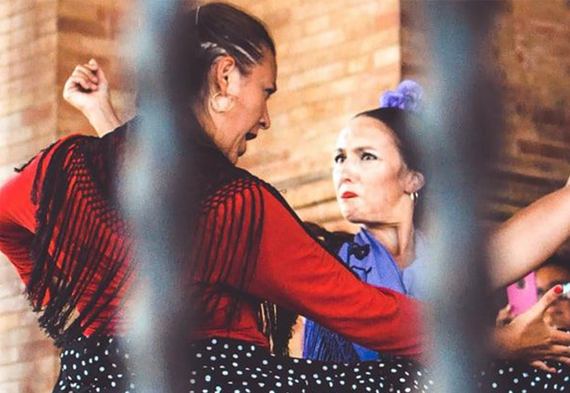
Flamenco is a genuine Spanish art, originating in Andalusia around the 18th century. It is comprised of three things: “Cante”, the song, “Baile”, the dance, and “Toque”, the playing of the guitar. Each form lends its own artistic expression and flair to the performance. Because of its grassroots evolution, one of the most authentic ways to experience Flamenco is in a “juerga” (flamenco party). These are typically held among a small group of friends, in the quiet heart of the evening, with the moon lighting up an improvised stage.
Video file
Flamenco, form of song, dance, and instrumental (mostly guitar) music commonly associated with the Andalusian Roma of southern Spain. The roots of flamenco, though somewhat mysterious, seem to lie in the Roma migration from Rajasthan (in northwest India) to Spain between the 9th and 14th centuries. These migrants brought with them musical instruments, such as tambourines, bells, and wooden castanets, and an extensive repertoire of songs and dances. In Spain they encountered the rich cultures of the Sephardic Jews and the Moors. Their centuries-long cultural intermingling produced the unique art form known as flamenco.
The golden age of flamenco is usually considered to be the period between roughly 1780 and 1845. Singing was then the primary aspect of flamenco, dancing and musical accompaniment being secondary. What had been an essentially outdoor, outsider, family-oriented activity that focused on cante was transformed beginning in 1842, when the first café cantante was founded in Sevilla (Seville). Many others that sprang up in the major urban centres of Spain—notably Granada, Córdoba, and Sevilla—placed emphasis on the musicians and dancers, and it was in this period that the singer began to take a secondary role. Although these commercial interests afforded a living for many performers, they also brought about what many considered a bastardization of an authentic indigenous art form. Several intellectuals sought to restore the purity of flamenco, and in 1922 they instituted the first flamenco competition—calling for cante primitivo andaluz (“primitive Andalusian cante”). This timely attempt to prevent the further debasement of an authentic folk art effectively promoted flamenco to a sophisticated urban public and helped to further the thoughtful development of the art within a modern context.
The cante, or song
The essence of flamenco is cante, or song. Flamenco songs fall into three categories:
- cante jondo
(“profound song,” or “deep song”): Thought to be the oldest form. It is characterized by profound emotion and deals with themes of death, anguish, despair, or religious doubt.
- cante intermedio
(“intermediate song,” also called cante flamenco): A hybrid form that incorporates elements of Spanish music styles, especially the fandango.
- cante chico
(“light song”): Simpler in rhythm than the other two forms, also requires considerable technical skill but much less emotional investment, dealing with humour and subjects of love, the countryside, and gaiety.
The baile, or dance
After the mid-19th century, flamenco song was usually accompanied by guitar music and a palo seco (Spanish: “dry stick,” a stick that was beat on the floor to keep time) and a dancer performing a series of choreographed dance steps and improvised styles.
Baile, or dance, has been the dominant element of flamenco since that time, though it is never performed without accompaniment.
As an accompanist to the dancer (bailaor [male], bailaora [female]), the singer (cantaor) relates the legends and stories of daily life that reflect the experiences of an outcast subculture within predominately white, Christian Spain. The dancer is the protagonist of the singer’s narrative and its interpreter. The baile is a sensuous display of fluid motion, stylized and yet highly personal, involving movement of the arms (braceo) and upper torso, hand and finger movement (florea), footwork (zapateado), and heelwork (taconeo), which are often displayed in long solo passages (solea). Male dancers usually perform intricate footwork, whereas female dancers, traditionally wearing elaborately ruffled dresses, emphasize the hands and upper torso. The guitarist (tocoar) keeps the rhythm (compás) necessary to the dancer’s individual rhythmic cadences, accompanying (and, when the performance space is large, even following) the dancer.
Content partially adapted from Britannica
Let us assist in planning your next immersion experience and help make it accessible to all of your students! We have many destination options for Language Immersion programs worldwide.
Necessary traveler protections for teachers and students are already integrated into our programs too!
Contact us today!